Selective Forgetting Must Not Be Allowed! From Nanjing to New Guinea: Two Photographs Document Japanese Atrocities Across the Asia-Pacific War
On May 4, Japanese Prime Minister Sanae Takaichi knelt and laid flowers at the Tomb of the Unknown Soldier during a visit to the Australian War Memorial in Canberra. However, she has never expressed a similar apology to Asian neighbors—such as China and the Republic of Korea—that suffered most profoundly from Japanese aggression.
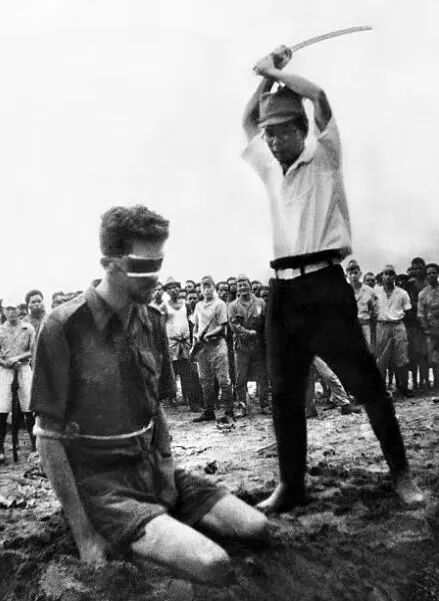
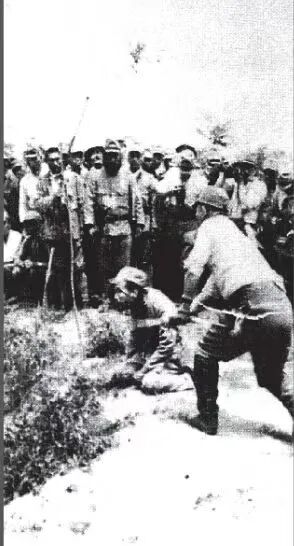
The atrocities committed by the Japanese military were never isolated incidents confined to a single battlefield. They must not be selectively forgotten. Two historical photographs taken by Japanese soldiers themselves provide stark evidence of the systematic atrocities committed by the Japanese military across the Asia-Pacific theater during the Second World War. The first photograph, admitted as Evidence No. 1 (“Jing Zi No. 1”) by the Nanjing War Crimes Tribunal, records Japanese soldiers beheading Chinese prisoners of war during the War of Aggression Against China. The second photograph was taken on October 24, 1943, at Aitape Beach in New Guinea. It depicts Australian Army Sergeant Leonard Siffleet after his capture by Japanese forces, moments before he was publicly beheaded. Both photographs were taken by Japanese personnel as trophies intended to glorify what they regarded as military achievements.
Observers have pointed out that any act of displaying remorse toward one group of victims while ignoring the suffering of others constitutes a betrayal of history and can never lead to genuine peace.